Does Finishing a Basement Increase Home Value?
April 17, 2025 · 8 min read · AC Remodeling

Have you ever looked at your unfinished basement and wondered about its untapped potential? That concrete floor, exposed beams, and utilitarian space could be transformed into one of your home’s most valuable and versatile areas.
Sure, it’s great to remodel an unfurnished basement to give your home a new opportunity, but on the flip side, when it comes to selling your home, a finished basement may be an ROI differentiator.
Homeowners can expect to recover approximately 70% of their investment when finishing a basement, making it a relatively sound renovation project compared to other home improvements. However, the actual return on investment varies significantly based on your local real estate market, the quality of the finished space, and how well the new basement complements your existing home’s value.
In this guide, we’ll explore the financial impact of basement finishing projects, what potential buyers are looking for in below-grade living spaces, and how to maximize your return on investment when transforming your basement from unfinished storage to valuable living area. Whether you’re considering a simple basement remodel or a comprehensive transformation, understanding these factors can help you make informed decisions about your home improvement budget.
How Much Value Does a Finished Basement Add?
When evaluating whether finishing your basement makes financial sense, it’s important to understand how finished basements are valued in the real estate market. Unlike above-grade square footage, basement space—even when beautifully finished—typically doesn’t command the same value per square foot as your main living areas.
Real estate appraisers generally value finished basement space at about 50-70% of the value of above-ground living space. For example, if above-grade space in your neighborhood sells for $200 per square foot, your finished basement might add $100-$140 per square foot to your home’s appraised value. This difference exists because basements often have lower ceiling heights, fewer windows, and may be perceived as less desirable than above-grade rooms.
That said, in certain markets—particularly those with cold climates where basements are standard—a well-executed basement finishing project using strategic basement remodeling ideas can substantially increase your property value. In the DMV area, for instance, finished basements are the norm in higher-end homes, making them essential for competitive market positioning.
The total impact on your home value also depends on how much of your basement you finish. Converting a full basement into usable living space will naturally add more value than finishing only a portion. However, a thoughtfully designed partial basement renovation that creates a functional layout will offer a better return on investment than a complete but poorly planned full basement remodel.
One important tip to remember: document all permits and ensure your basement finishing project complies with local building codes. Non-compliant improvements can actually decrease your home’s value when discovered during a pre-sale inspection. It is the homeowner’s responsibility to make sure the contractor pulls the necessary permits for your basement finishing project. Once the project is finished, the new floor plans and layout must be registered in the City or County, and your property value will go up.
Related Article: Top 5 Questions to Ask Before Hiring a Design-Build Remodeling Contractor in Montgomery County, MD
Design Considerations When Creating Basement Space That Sells
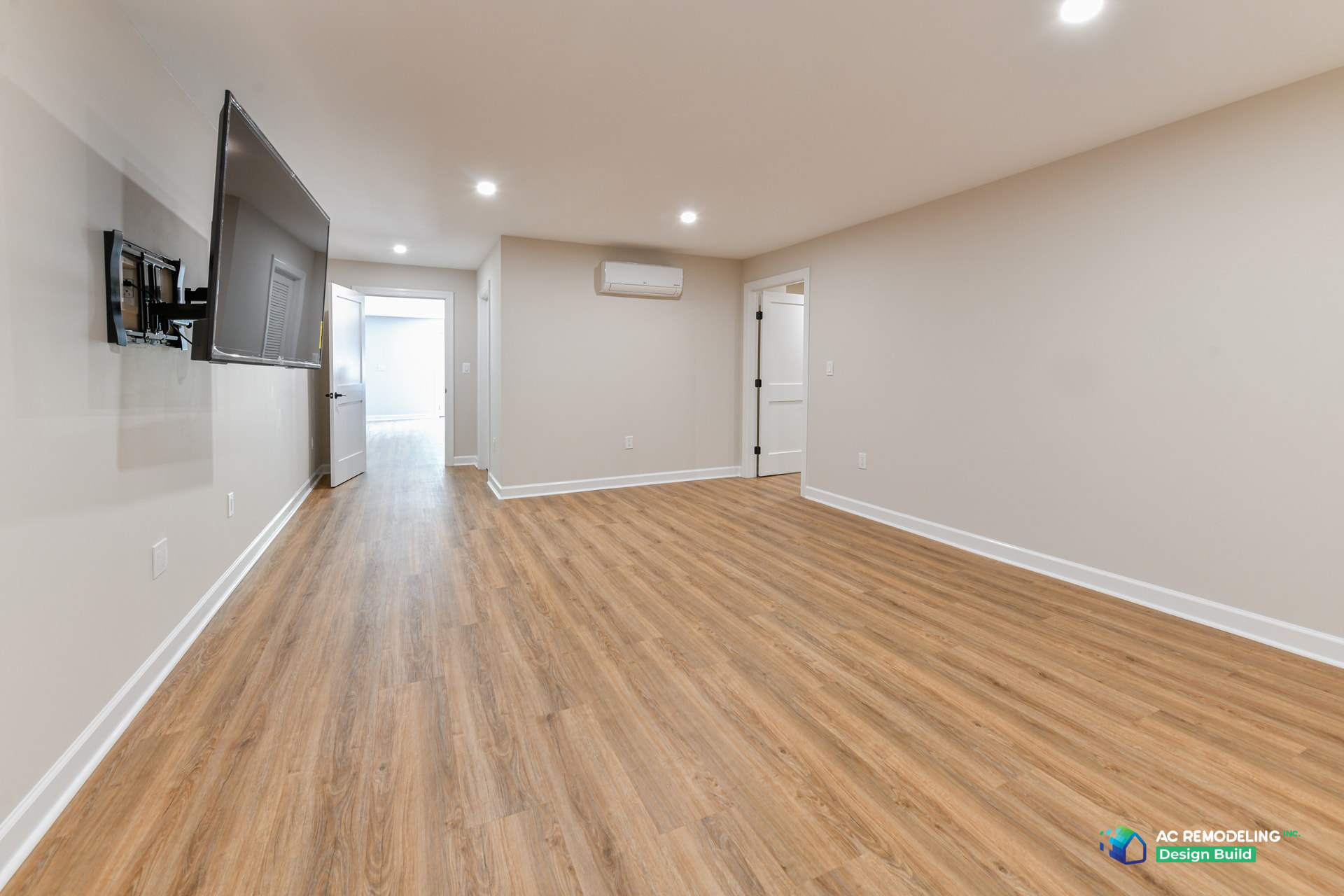
The way you finish your basement significantly affects how much value it adds to your home. Creating a flexible, functional basement space that appeals to a wide range of potential buyers will maximize your return on investment.
Thoughtful Layout and Room Definition
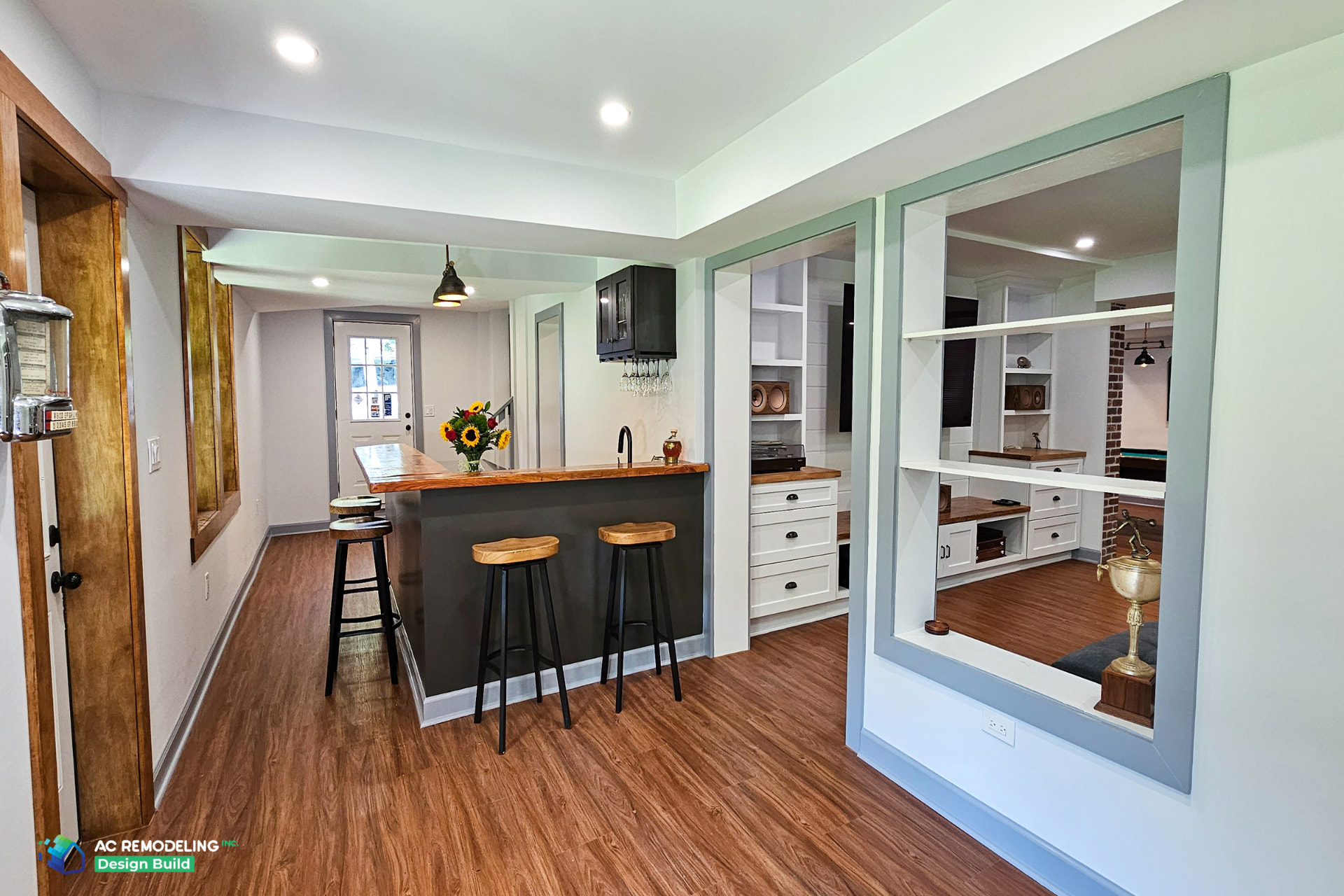
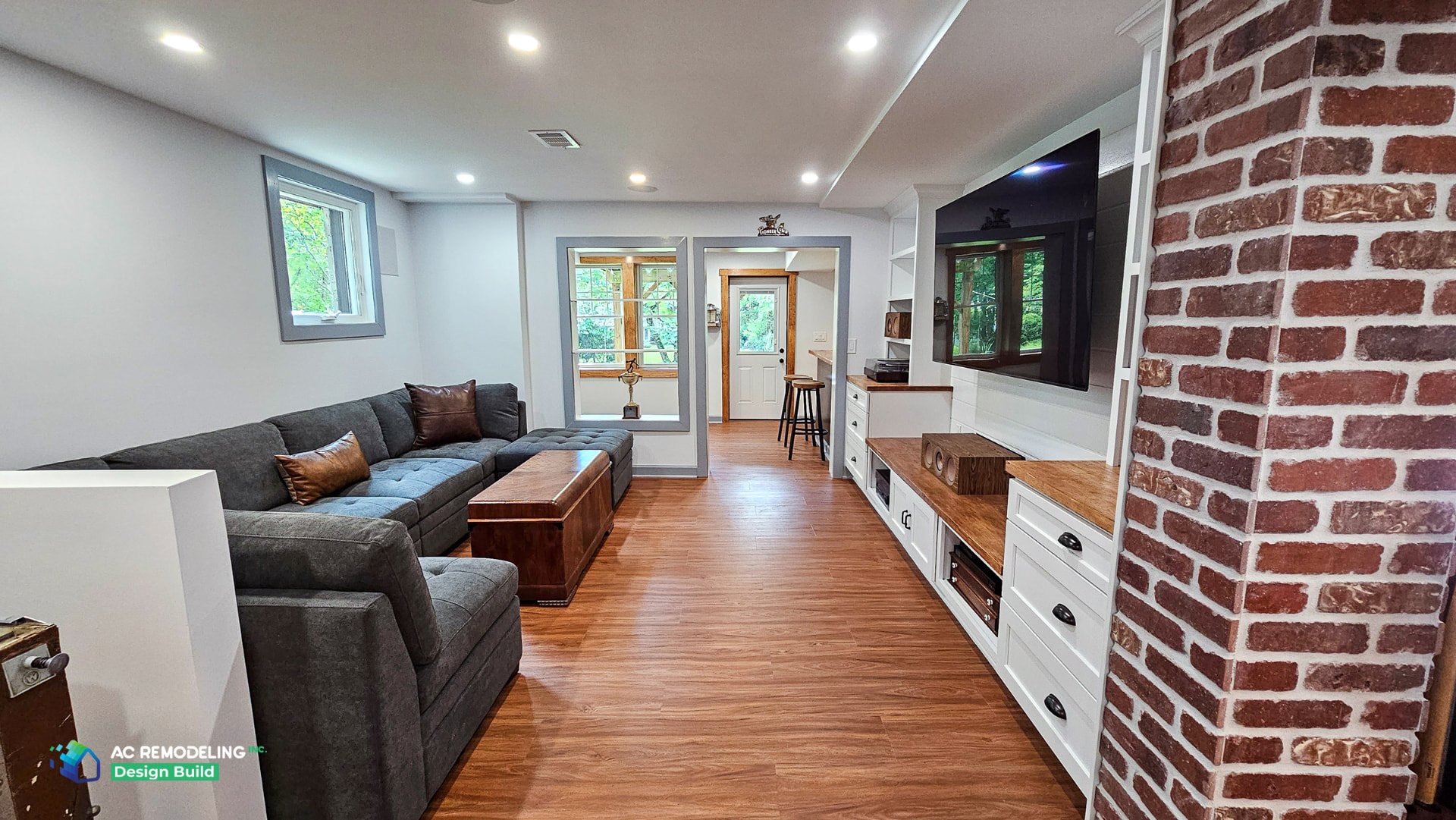
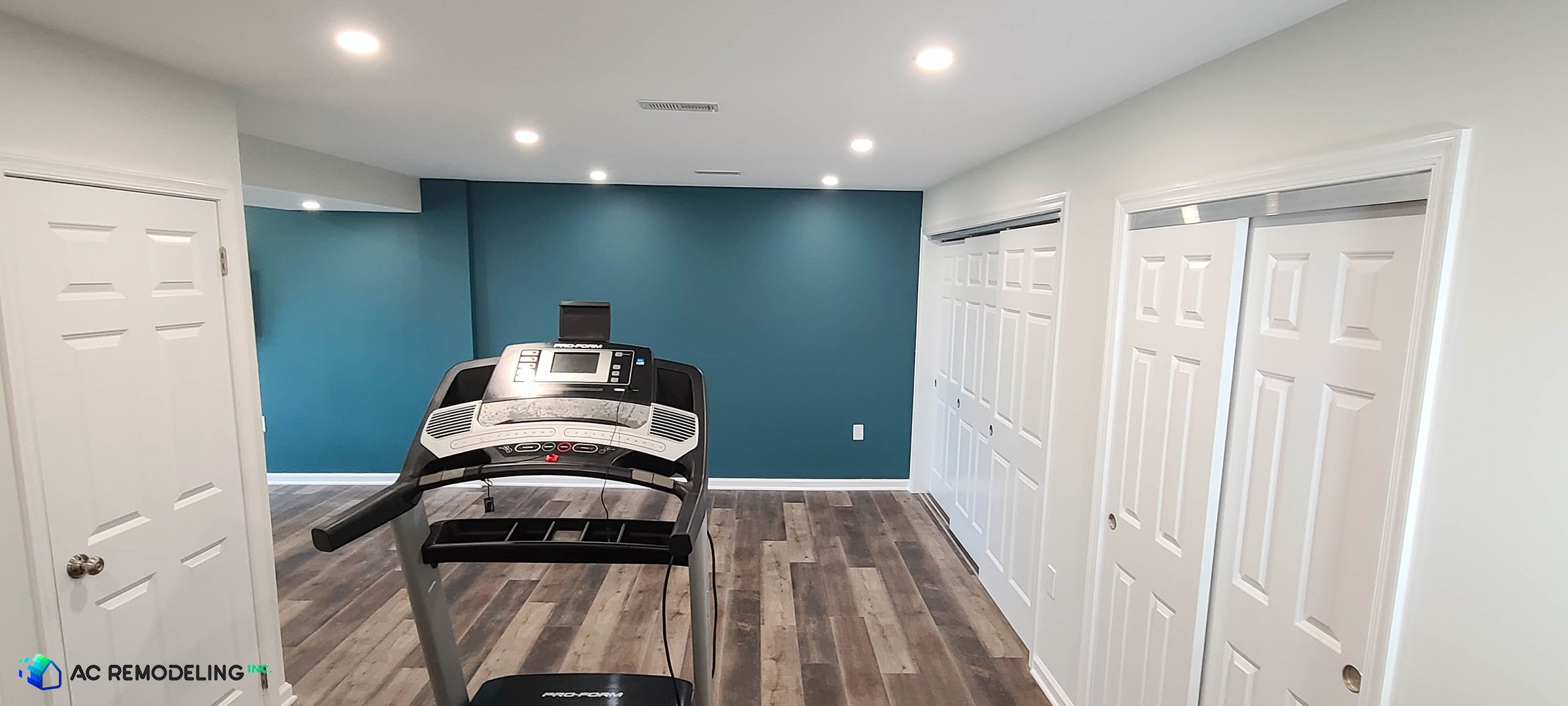
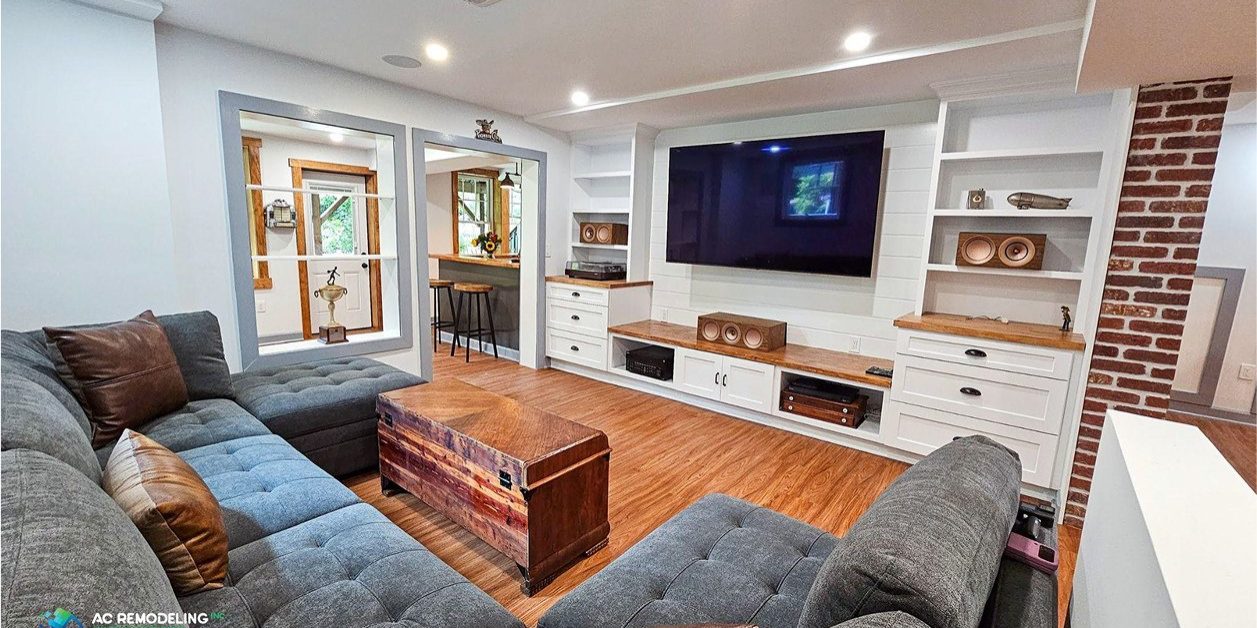
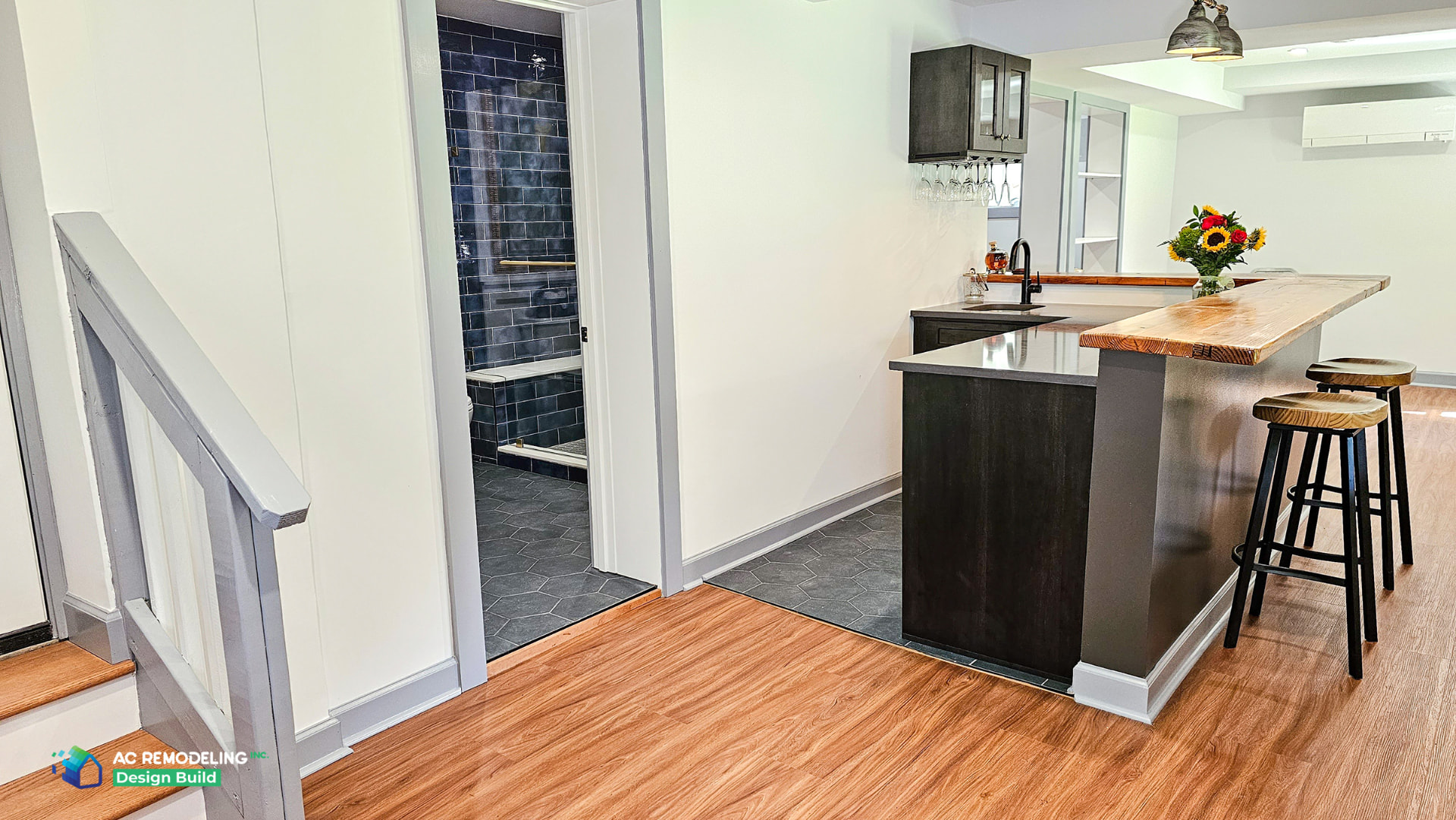
While open-concept designs remain popular throughout homes, basements often benefit from some thoughtful room division. Consider creating distinct zones such as a family room or entertainment area, a guest bedroom with an adjacent bathroom, a home office or craft room, and perhaps a wet bar or kitchenette.
These defined spaces help potential buyers envision how they might use the basement. However, avoid overly specialized rooms like elaborate home theaters or wine cellars unless they align with neighborhood expectations and your local market trends.
Light and Brightness
One of the most significant factors in creating valuable basement space is addressing the natural light limitations. Basements with ample lighting and a bright, airy feel command higher values than dark, cave-like spaces.
For garden-level or walkout basements, maximize window size and quantity. Install egress windows where possible, especially for bedroom spaces (these are required by building codes anyway). Use recessed lighting throughout, with task lighting in specific areas. Choose light, reflective colors for walls and ceilings to allow light to flow through the space.
In homes with walkout basements that open to the backyard, creating a seamless indoor-outdoor connection can significantly boost the appeal and value of the space. French doors or sliding glass doors leading to a patio area make the basement feel like a natural extension of the home rather than a separate, lower-quality space.
Quality Finishes That Last
When selecting materials for your basement renovation, durability should be a top priority. Basements face unique challenges, like potential moisture issues and temperature fluctuations. Investing in quality, appropriate materials pays off in both longevity and resale value.
Remember that basement finishes don’t need to match the rest of your home exactly, but they should feel cohesive with your home’s overall style. A basement that feels disconnected from the main living space won’t add as much value as one that feels like a natural extension of the home.
AC Remodeling · Design Build
Schedule a Design Consultation
Every project starts with a conversation, not a sales pitch. We'll respond within one business day to discuss your vision.
Strategic Improvements to Maximize the ROI of Your Basement Project
Not all basement improvements deliver equal returns. To maximize the value your finished basement adds to your home, focus on these strategic elements that matter most to potential buyers and appraisers.
Addressing Structural and Mechanical Issues First
Before installing that wet bar or entertainment area, ensure that your basement’s fundamentals are sound. This includes waterproofing and moisture control, proper insulation, updated electrical panels with adequate outlets and lighting, sufficient heating and cooling, code-compliant egress, and appropriate ceiling height (ideally at least 7’6″ after finishing).
A beautifully decorated basement with underlying moisture problems or code violations can become a liability rather than an asset. In fact, addressing these core issues alone—even without decorative finishes—can increase your home’s value by reassuring potential buyers about the basement’s condition.
Adding a Bathroom
If your budget allows for only one significant basement upgrade, we recommend adding a bathroom to every basement remodeling project. According to a report by Remodeling Magazine, a basement bathroom addition can recoup up to 80% of its cost. Even a simple three-piece bathroom (toilet, sink, and shower) makes the basement significantly more functional as living space.
The key is proper plumbing installation, which may require a sewage pump system if your basement is below the sewer line. While this adds cost, it’s an essential investment for a code-compliant, valuable addition. Consult with your design-build company or general Contractor who specializes in basement bathroom installations to ensure proper execution.
Creating Flexible Space for Changing Needs
Today’s homebuyers value versatility. Rather than designing your basement for a single specific purpose, consider how the space might adapt to different uses over time. Plan electrical outlets and lighting for multiple potential furniture arrangements. Consider including a kitchenette area that could support future use as an in-law suite or rental unit (where zoning allows).
This flexibility makes your finished basement appealing to a broader range of potential buyers, each of whom might envision using the space differently. For aging family members, the basement could become an accessible living area. For younger families, it might serve as a playroom that later transitions to a teen hangout space.
A basement with potential for rental income deserves special mention. In markets where accessory dwelling units are permitted, a basement with a separate entrance, bathroom, and kitchenette can significantly increase your property value by offering income potential. Check local zoning laws before pursuing this option.
Making the Smart Investment
When deciding whether finishing your basement is worth the investment, consider these key factors that will influence your potential return:
- Your local real estate market: In areas where finished basements are expected, like the Washington, DC area, not having one could hurt your sale price. Conversely, in regions where basements are uncommon, buyers might not place as much value on the space.
- Your home’s current value: The “principle of progression” in real estate suggests that improving a lower-valued home in a neighborhood of higher-valued homes usually yields a better return than improving an already high-valued home.
- How long you plan to stay: If you’ll remain in your home for years, factor in the enjoyment and utility you’ll get from the space, not just the resale value.
- Your basement’s natural attributes: A garden-level basement with large windows or a walkout basement with an exterior entrance will generally add more value than a standard below-grade basement with minimal natural light.
- Neighborhood comparables: If most homes in your area have finished basements, completing yours helps keep your home competitive rather than dramatically increasing its value beyond comparables.
For most homeowners, a middle-ground approach makes sense: finish your basement with quality materials and a flexible layout, but avoid over-customization or luxury upgrades that won’t pay for themselves. Focus on creating a functional, comfortable space that appeals to a broad audience.
Building Value From the Ground Up
Finishing your basement represents one of the more significant home improvement projects you might undertake, but it also offers substantial rewards both in lifestyle enhancement and potential home value increase. While the exact return on investment varies based on your local market, home type, and the quality of work, a properly designed and executed basement finishing project typically ranks among the wiser investment choices for homeowners.
Beyond the numbers, consider the immediate benefits: additional living space for your family, room for guests, a dedicated work-from-home area, or simply a retreat within your own home. These quality-of-life improvements often justify the investment even before considering the financial returns.
Ready to maximize your home’s value and create the perfect space for your family? A finished basement, with a potential 70% ROI, is a smart investment. AC Remodeling’s design and construction expertise ensures a seamless process. Take the first step towards your dream basement – schedule your initial consultation now, and let’s bring your vision to life.